
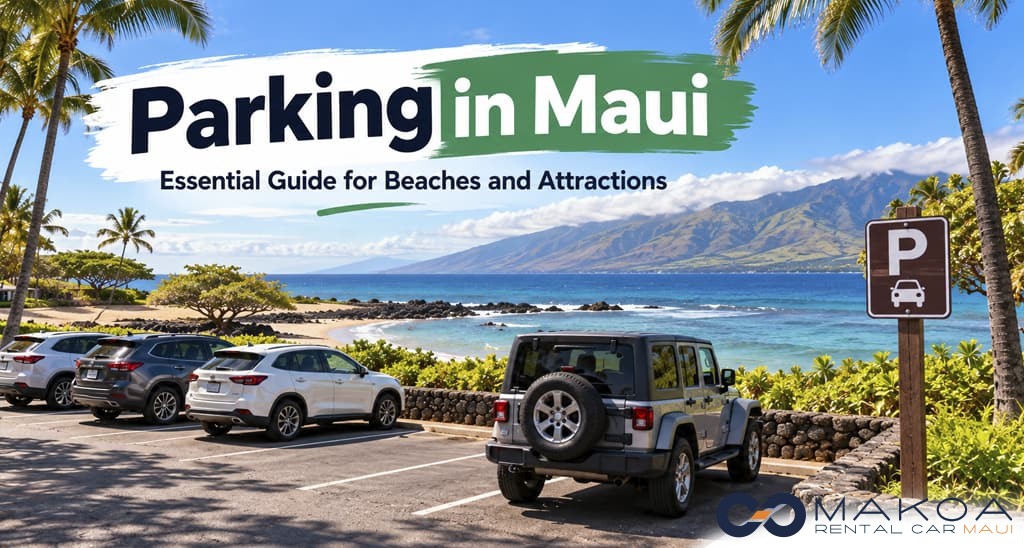
Parking in Maui is an important part of planning a successful island road trip, especially if you want to explore beaches, small towns, scenic viewpoints, and famous attractions on your own schedule.
Parking conditions vary considerably across the island: some destinations have large dedicated lots, while popular beaches and scenic areas may fill quickly. Knowing what to expect before you drive can save time, reduce stress, and help you decide whether renting a car in Maui is worth it for your vacation.
Table of Contents
ToggleWhat You Should Know About Parking in Maui
The first thing to understand about Parking in Maui is that there is no single system covering every destination. You will encounter county parking lots, state park facilities, national park parking, hotel and resort parking, street parking, private lots, and designated beach access spaces.
Always read posted signs when you arrive. Parking restrictions, operating hours, fees, resident-only areas, and time limits can vary by location and may change. Never assume that an empty roadside area is a legal parking space simply because another vehicle is already parked there.
Maui County also operates the Park Maui parking management program in selected high-use locations. The program includes paid parking zones and measures designed to preserve access for local residents. :chatgpt-content-reference{index=”0″}
Parking at Maui Beaches
For many visitors, Parking in Maui matters most when visiting the island’s beaches. Some beach parks have convenient dedicated lots, while others offer limited spaces that can fill early in the day.
The Kamaʻole Beach Parks in Kīhei are popular examples. Official Hawaii tourism information notes that Kamaʻole Beach Parks I, II, and III provide parking along with facilities such as lifeguards and recreational areas. :chatgpt-content-reference{index=”1″}
However, parking rules in South Maui are evolving. Park Maui currently operates at selected Kamaʻole parking areas, including paved lots at Kamaʻole I and III, with different provisions for Hawaii residents and visitors. Always check the signs or current Park Maui information when you arrive. :chatgpt-content-reference{index=”2″}
Another important rule when using Parking in Maui near public beach access is to use designated beach parking for legitimate beach recreational purposes. County regulations allow enforcement and towing when public beach access parking is misused. :chatgpt-content-reference{index=”3″}
Arrive Early at Popular Beaches
One of the simplest strategies for Parking in Maui is arriving earlier in the day. Popular beach lots can become busy, particularly on weekends, holidays, and during peak visitor periods.
If the official lot is full, do not create your own parking space on vegetation, block driveways, obstruct traffic, or park where signs prohibit it. Moving to another beach and returning later is often a better option than risking a ticket, tow, or conflict with residents.
Parking in Kīhei and South Maui
South Maui is one of the areas where understanding Parking in Maui is especially useful because Kīhei has a long coastline filled with beaches, restaurants, shops, and accommodations.
Kīhei stretches along approximately six miles of coastline and includes numerous beach areas such as Kamaʻole, Kalama Beach Park, Kalepolepo, and Waipuʻilani. :chatgpt-content-reference{index=”4″}
Rather than expecting to leave your vehicle in one space all day while visiting multiple unrelated businesses or beaches, pay attention to the intended use of each lot. Some parking belongs to businesses or private developments, while public lots may have their own regulations.
Parking in Maui Towns
Parking in Maui is not only a beach issue. Town centers can have street spaces, municipal lots, shopping-center parking, and private facilities.
Wailuku is one area included in Maui County’s parking management system, with both paid and permit parking zones. Visitors should check signage carefully before leaving their vehicle. :chatgpt-content-reference{index=”5″}
In smaller towns such as Makawao or Pāʻia, parking availability can depend heavily on the time of day. If you are visiting shops, restaurants, or galleries, choose legal public parking or parking specifically provided by the business you are using.
Parking at Haleakalā National Park
Planning Parking in Maui becomes particularly important when visiting Haleakalā National Park. The Summit District has designated parking areas at visitor facilities and overlooks, but availability can become limited during busy periods.
The National Park Service currently warns of limited parking and possible traffic delays around the Haleakalā Visitor Center due to infrastructure work in the Summit District. Because park conditions can change, checking official alerts before driving up the mountain is recommended. :chatgpt-content-reference{index=”6″}
The Headquarters Visitor Center includes automobile parking, and drivers should always use established spaces and pullouts rather than stopping on the roadway. :chatgpt-content-reference{index=”7″}
Also remember that there are no gas stations inside Haleakalā National Park, so parking is only one part of preparing for this drive. The National Park Service identifies Pukalani as the final place to obtain fuel on the route toward the Summit District. :chatgpt-content-reference{index=”8″}
Parking Along the Road to Hana
The Road to Hana presents a very different Parking in Maui experience. Many attractions are located along a narrow, winding highway where safe parking is limited.
Never stop your vehicle in the travel lane simply because you see a waterfall or beautiful viewpoint. Look for legitimate pullouts or designated parking areas and respect all no-parking signs.
Roadside congestion can affect residents as well as visitors, so considerate driving and parking are particularly important in East Maui. If a stop is full, continue to another attraction rather than blocking access or creating a dangerous situation.
Parking at Waiʻānapanapa and Other Reservation Attractions
Some destinations require more planning than simply finding Parking in Maui. Certain heavily visited attractions use reservations or controlled entry systems.
Before visiting a state park or other major attraction, check the official website to determine whether advance reservations, entrance fees, or parking reservations are required. Do not rely on older travel blogs because access policies can change.
This is particularly important when planning a full Road to Hana itinerary, where discovering at the last minute that a destination requires advance arrangements can disrupt the entire day.
Can You Park Overnight at Maui Beach Parks?
Travelers researching Parking in Maui sometimes assume that a beach parking lot can also be used as an overnight stopping place. That is not a safe assumption.
Maui County regulations prohibit parking vehicles in public parking areas at recreational facilities after midnight without written permission from the parks department. :chatgpt-content-reference{index=”9″}
Therefore, do not treat public beach lots as free overnight parking or informal campsites. If you need overnight vehicle parking, use accommodation or another location where overnight parking is specifically permitted.
Never Leave Valuables Visible in Your Vehicle
Another practical rule for Parking in Maui is to avoid leaving valuable items visible inside your car. This is good practice at beaches, hiking areas, scenic viewpoints, and town parking lots.
Ideally, take important possessions with you. If you must leave luggage in the vehicle while moving between accommodations, keep it out of sight and minimize the amount of time the vehicle is unattended.
Check Parking at Your Hotel Before You Book
Accommodation parking is an often-overlooked part of Parking in Maui. Hotels, resorts, vacation rentals, and condominiums can have very different parking arrangements.
Before booking your stay, check whether parking is included, whether there is a nightly charge, whether spaces are assigned, and whether oversized vehicles have restrictions. These details can influence the real cost and convenience of renting a vehicle.
Is Renting a Car in Maui Worth It Despite Parking?
After learning about Parking in Maui, you might wonder whether dealing with parking makes renting a vehicle less worthwhile. For travelers who plan to explore multiple regions of the island, the flexibility of having a car usually remains a major advantage.
Maui can be explored using buses, taxis, shuttles, and organized tours, but having your own vehicle gives you greater control over when and where you travel. Official Hawaii tourism information recognizes rental cars as an important option for visitors who want to explore the island independently. :chatgpt-content-reference{index=”10″}
With reasonable planning, Parking in Maui should not prevent you from enjoying a rental car. It simply means arriving early at popular locations, reading signs, respecting local regulations, and researching special destinations in advance.
Essential Parking Tips for Maui
Keep these Parking in Maui rules in mind throughout your trip:
- Always follow posted parking signs.
- Use designated spaces whenever available.
- Arrive early at popular beaches and attractions.
- Never block driveways, gates, or emergency access.
- Do not stop on narrow highways for photographs.
- Check whether attractions require parking or entrance reservations.
- Verify your hotel’s parking policy before arrival.
- Do not assume public beach lots allow overnight parking.
- Keep valuables out of sight.
- Respect spaces or hours reserved for local residents.
Final Thoughts
Parking in Maui is straightforward when you plan ahead and respect the rules of each destination. Beach parks, towns, national parks, scenic routes, and popular attractions all have different parking conditions, so there is no universal approach that works everywhere.
Arrive early when visiting high-demand locations, use official lots and pullouts, check current restrictions, and never park in a way that obstructs residents or traffic.
If you are asking whether renting a car in Maui is worth it, parking considerations should be part of the decision, but they do not outweigh the freedom a vehicle can provide for most travelers who want to explore the island.
By understanding Parking in Maui before setting out, you can spend less time searching for a space and more time enjoying Maui’s beaches, towns, mountains, and unforgettable scenery.
Make the journey more convenient by opting for Rent a Car in Maui, which lets you travel at your own pace and enjoy hidden gems along the coast
Visit MAKOA Rental Car Maui for exceptional service and affordable car rentals. You can easily find us on the map at our offices or contact us directly at +1 808-757-7747. We are here to make your Maui journey unforgettable.